Settle in
Thirty seconds of stillness. The music starts and the system simply listens, taking its baseline — no feedback, nothing to notice. Pick 12 or 33 minutes; the settling period is the same.
Auditory neurofeedback · a relaxation ritual
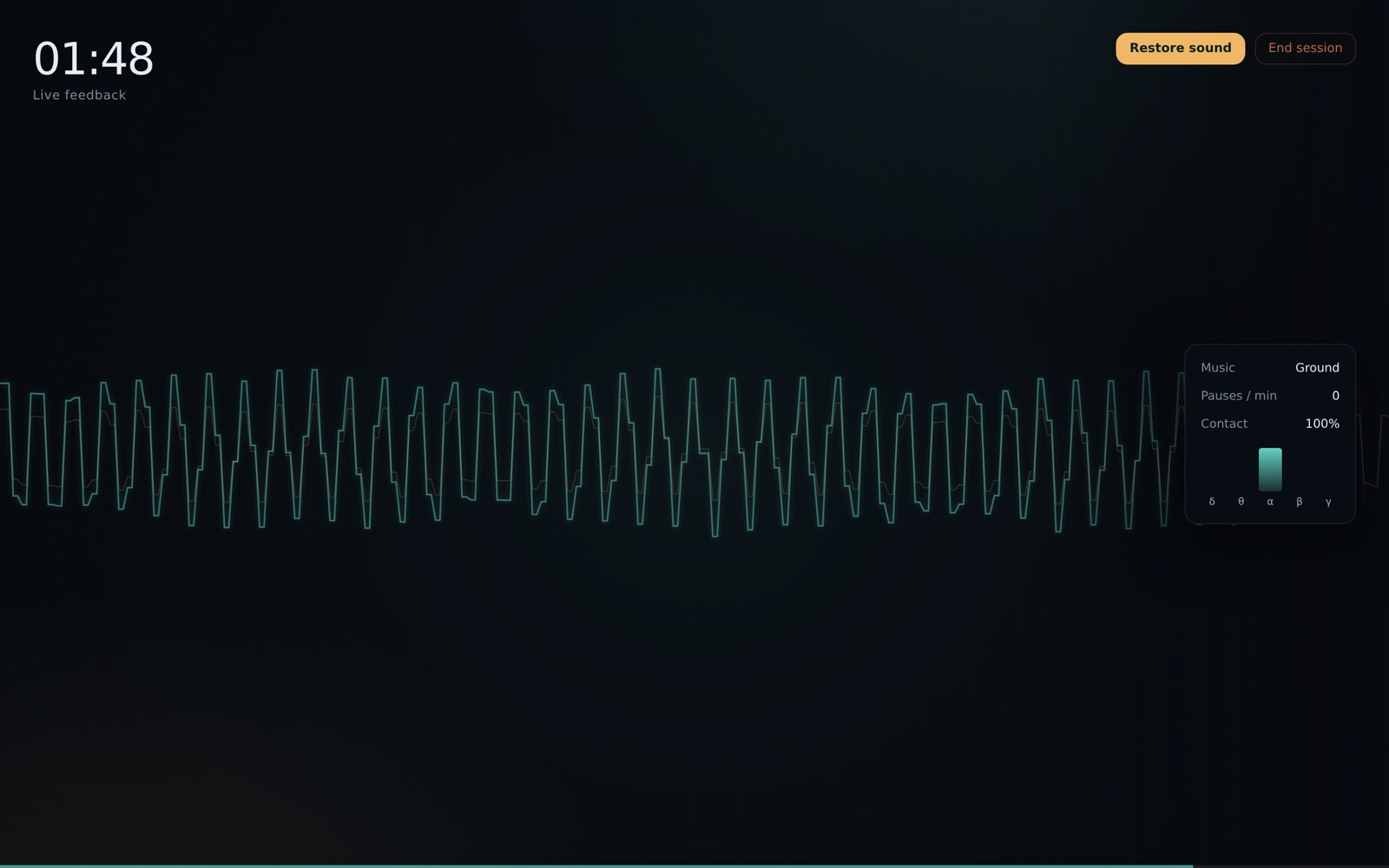
Put on the headband, pick a length, and the music begins. For the next half-hour nothing is asked of you: whenever the signal's dynamics shift, the sound softens for a quarter of a second and comes back. No task, no protocol, no pattern to memorise — the session runs itself. You can watch the live trace, or set the screen down.
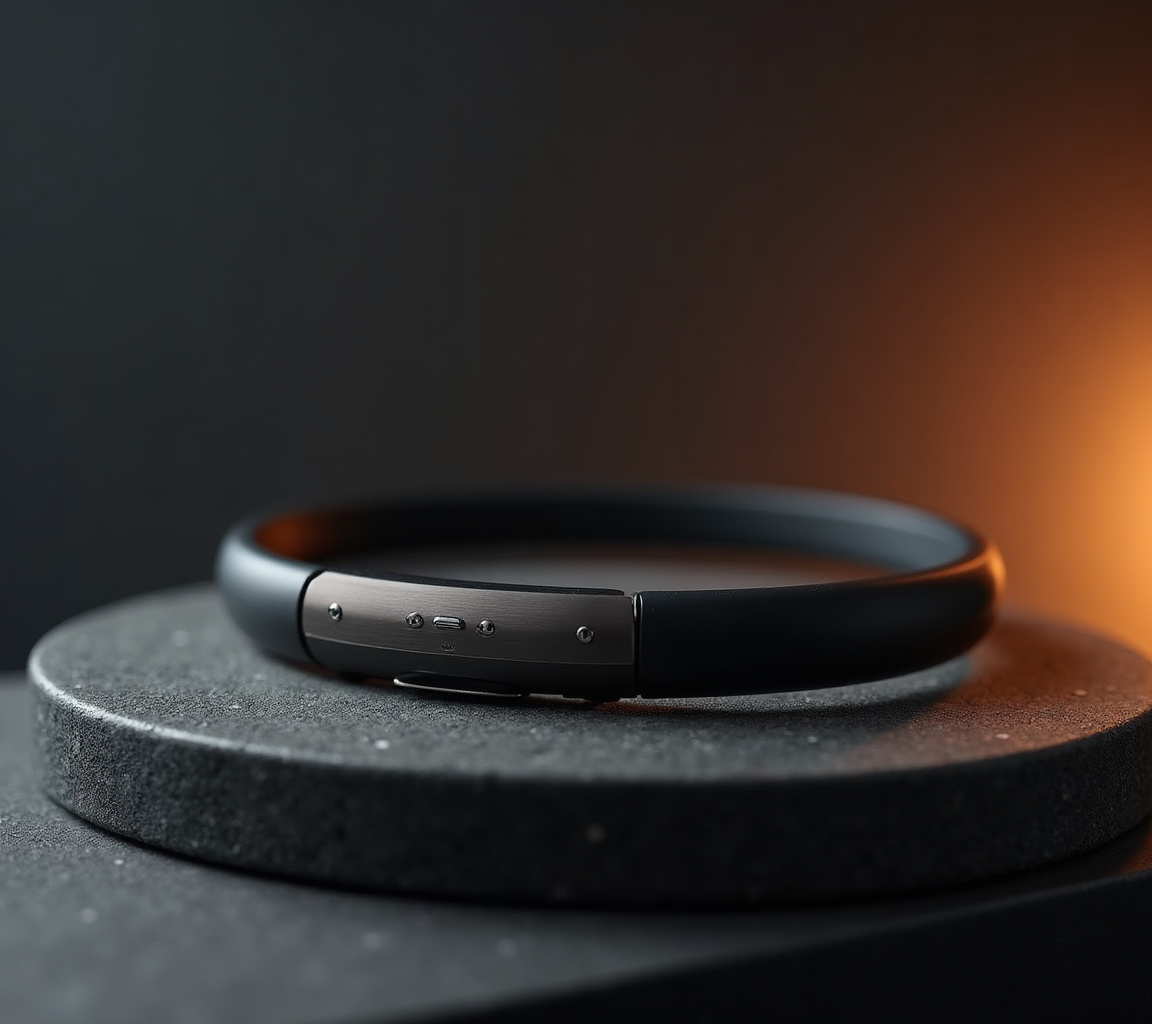
Concept render — final industrial design may differ.
The session
Three parts. None of them ask anything of you.
Thirty seconds of stillness. The music starts and the system simply listens, taking its baseline — no feedback, nothing to notice. Pick 12 or 33 minutes; the settling period is the same.
A few soft dips a minute. Through the session the music dulls for a quarter of a second and returns — a handful of times each minute. There's nothing to push or chase; the signal guides it, and you just hear it.
A rating, a note, a trend line. When the session ends you see a short summary — how it went in your own words, and a trend across sessions that builds up over the weeks.
The loop
From scalp to speaker in a quarter of a second — four small steps.
Electrodes in a soft headband rest against the scalp and pick up the faint electrical activity of the brain at rest. That is the entire input — nothing else is asked of you.
Twice a second the engine reduces the raw trace to eight features: the power in each frequency band, a measure of entropy, a measure of complexity, and the 1/f slope — a compact description of how the signal is behaving, not what you are thinking.
A running statistic holds the last two seconds up against the ten seconds before it, and flags when the signal's dynamics genuinely shift — not when they wobble. A fixed statistical floor keeps the flag from firing on background noise.
A shift fires, and the sound softens for about a third of a second before coming back exactly where you left it — a gentle dip your mind registers, never a jolt. Fades on the way down and the way up, so it's never a click.
The science
Honest engineering, stated plainly. Here is what the detector actually does.
Every half-second the engine reduces the raw signal to eight numbers: the power in five frequency bands, the sample entropy, the Lempel–Ziv complexity, and the 1/f slope. Together they describe how rich, regular and self-similar the signal is over time — behaviour, not meaning.
Those numbers feed a Hotelling T² change statistic — a multivariate distance between the last two seconds and the ten seconds before it, whitened by the signal's own jitter. A fixed χ² floor keeps the detector from crying wolf, and an adaptive multiplier raises the bar on noisy stretches so the firing rate stays honest.
A threshold that's a percentile of its own history always fires at its set rate — aim for three times a minute and you get three times a minute, even on pure noise. An absolute statistical floor means silence in means the signal really didn't change.
Blink, movement and electrode pops are caught and excluded before they can masquerade as a shift — so a duck is a genuine change in the signal, not a shrug or a scratch.
The work is tracked in a changelog, and the detector sits behind a test suite whose gates pass or fail — recall and false-alarm rate either clear the bar or the change doesn't ship.
Who it's for
Made for a home and for a practice — and for anyone who'd trade a noisy half-hour for a calm one.
An evening wind-down ritual that lives in the house, not in a cloud. Several people, each with their own profile, history and trend line — one kit, shared, without mixing anyone's sessions. Family mode is built in: pick your name, start your session.
Two rooms off a single install, with per-session records you can revisit. The practice features — multi-client records and PDF session reports — are in development and will be included at no extra charge when they ship.
No diagnosis required, no condition to target. If a calm half-hour with music that responds to you is worth something, that's the whole audience. Nothing here is aimed at a specific condition or claim.
Devices
You do not install an app. OpenFlow runs in the browser on the device you already own; the sensor plugs into a computer, a tablet or a small box.
Pricing
One kit, two ways to put it to work. Everything here is a reservation today — nothing ships until you confirm your build slot.
$1,795 one-time
The whole system for one household — with unlimited sessions and every music palette.
Replacement electrodes each quarter, extended warranty, priority support.
Reservations today; we invoice when your build slot is confirmed. Cancel any time before invoicing.
$2,495 one-time
Everything in the Home Kit, plus a second headset and onboarding for your rooms.
Multi-client records and PDF session reports (in development — included at no extra charge when it ships), a two-room licence, priority support.
Eighteen months, then the kit is yours.
Reservations today; we invoice when your build slot is confirmed. Cancel any time before invoicing.
Tell us which kit and how to reach you. Nothing is charged now — we invoice when your build slot is confirmed.
You're on the list. We'll be in touch by email to confirm your build slot before anything is invoiced.
Questions
No. Put the headband on, choose 12 or 33 minutes, and the session runs itself — there's nothing to watch, answer or control. You can keep the live trace open if you like, or set the screen aside.
The system checks the signal as you settle in and tells you when contact is poor, before feedback begins. You adjust the electrodes and start again — the settling period means a session never starts on a weak reading.
Yes — through a bridge box. A small computer runs the engine, and the iPad opens the page in its browser. You keep the iPad's screen and simplicity, with no app and no App Store.
Yes. Profiles keep every person's sessions, ratings and trends separate, so a whole household can share one kit without anyone's history bleeding into anyone else's.
No. OpenFlow is a relaxation and self-regulation tool. It is not a medical device and it does not diagnose, treat, cure or prevent any condition. If you're working with a clinician on a health concern, this isn't a replacement for that relationship.
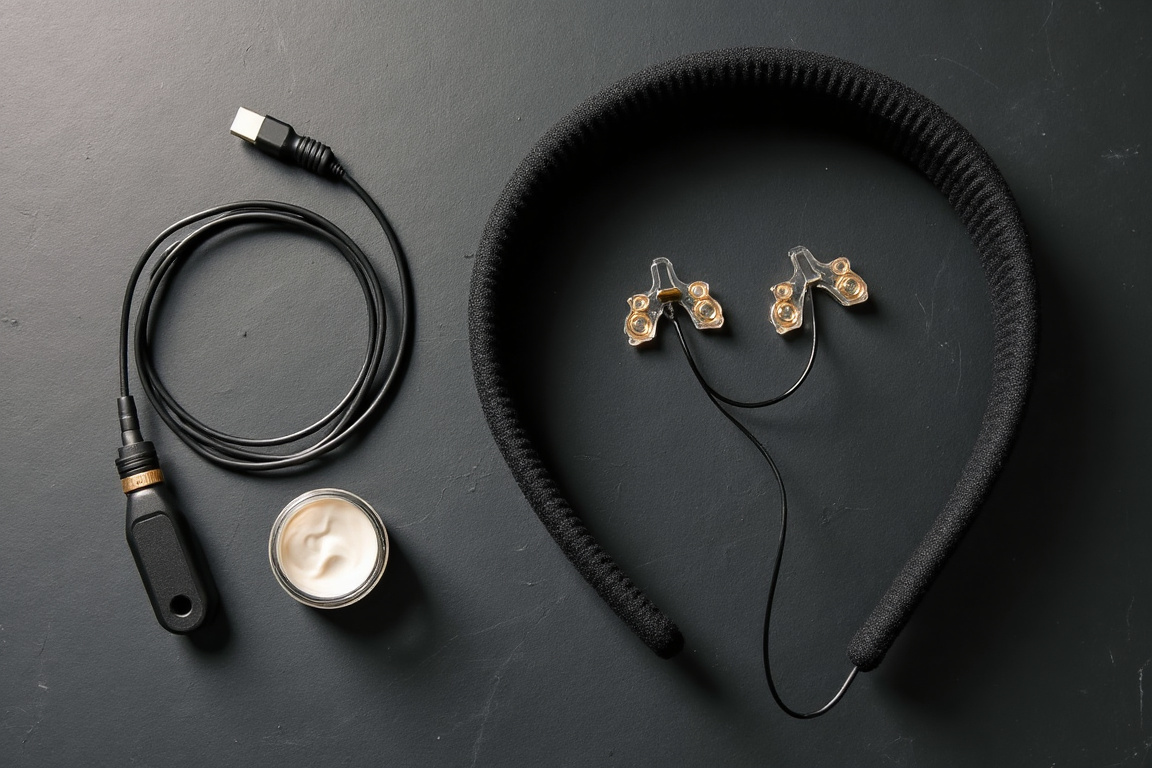
A sensor, a soft headband and electrodes — the same kind of open, off-the-shelf biosensing hardware used in research labs, connected over USB to a computer, tablet or small box.
The signal engine is built and running today; the physical kit is still on its way. Placing a reservation holds your build slot, and we invoice you when the slot is confirmed. Until then you can cancel any time.
Your session history, ratings and trend lines live on your own device — there's no account and nothing is uploaded. The only data we see is what you choose to send us through the forms on this page.
Contact
Questions, or ready to talk through a kit for your home or practice? Send a note — a real person reads every one.
Your inquiry is with us. We'll reply to the address you shared.
The fine print
Your sessions stay on your own device — history, ratings and trends are stored locally, with a CSV export you control. This website collects only what you type into its forms: your name, contact details and message, used to answer your inquiry or reservation and nothing more. We don't sell data, don't run third-party trackers, and load nothing from another domain.
Reservations are not purchases, and the hardware is not shipping yet. Nothing is charged until we invoice you and you confirm your build slot; you can cancel any time before invoicing, with no fee. The software is provided for relaxation and self-regulation and is not a medical device.